
Catholic Chapel Upper Floor | Unit 53 | Service Open the store page in the archive Read from brochure directory and/or floor plan
Directory record, present-day reference links, and archival source context for this Monroeville Mall store.


The Monroeville Mall Catholic Chapel, historically known as the St. Jude Chapel, was a unique religious fixture located inside the Monroeville Mall for over 30 years. It was part of a rare trend of "shopping mall chapels" established in the mid-20th century to provide a spiritual oasis for both mall employees and shoppers.
Key History & Facts
Legacy and Current Religious Presence
The Catholic Chapel at Monroeville Mall formed part of a much longer tradition of Catholic ministry in Western Pennsylvania. The earliest recorded Catholic Mass within the present boundaries of the Diocese of Pittsburgh was celebrated in 1754 by a French Franciscan chaplain at Fort Duquesne. A small chapel dedicated to the Virgin Mary under the title “The Assumption of Our Lady of the Beautiful River” was subsequently established at the fort. It was abandoned after the French destroyed Fort Duquesne in 1758.
Catholics in Western Pennsylvania initially belonged to ecclesiastical jurisdictions covering much larger portions of the United States. The region became part of the Diocese of Baltimore in 1789 and the Diocese of Philadelphia in 1808. As Pittsburgh and the surrounding industrial communities expanded, Catholic leaders recognized the need for a separate diocese serving the western portion of Pennsylvania.
The Diocese of Pittsburgh was formally established on August 11, 1843, with territory taken from the Diocese of Philadelphia. Michael O’Connor was appointed its first bishop. O’Connor traveled to Ireland to recruit priests, seminarians, and members of religious communities for the rapidly developing diocese. Under his leadership, the diocese established educational, charitable, and religious institutions, including an orphan asylum, a seminary, a school for girls, a chapel serving African American Catholics, and the Pittsburgh Catholic. He also welcomed the Benedictines who established Saint Vincent Archabbey in Latrobe.
During the second half of the nineteenth century, Catholic immigration transformed Western Pennsylvania. Irish, German, Italian, Polish, Slovak, Croatian, Lithuanian, and other immigrant communities arrived to work in the region’s mines, mills, railroads, factories, and steel plants. The diocese responded by establishing numerous territorial and nationality-based parishes, often assigning priests who could minister in the languages spoken by their congregations.
The diocese continued to expand its educational and social mission during the twentieth century. Duquesne University developed from the Pittsburgh Catholic College of the Holy Ghost, while institutions such as Central Catholic High School, Carlow University, and La Roche University emerged from the work of Catholic religious communities. Diocesan parishes, schools, hospitals, charitable organizations, and social-service programs became deeply integrated into the civic life of the Pittsburgh region.
After World War II, Catholic population patterns began shifting from Pittsburgh’s older urban and industrial neighborhoods into rapidly growing suburbs such as Monroeville. St. Bernadette Parish was established in 1955 after local Catholics organized the Monroeville Catholic Guild and began holding Masses in the former Majestic Gardens nightclub. Its permanent church was constructed during the same period in which Monroeville Mall was being developed and was dedicated on September 27, 1969, only months after the mall opened.
North American Martyrs Parish was established in 1960 to serve additional Catholic families settling in the Monroeville area. The simultaneous growth of these parishes, Monroeville’s residential communities, its highway network, and the Monroeville Mall illustrates how religious and commercial institutions adapted to the same broad movement of population into the eastern suburbs.
From the late twentieth century onward, the Diocese of Pittsburgh confronted declining industrial employment, changing population patterns, reduced Mass attendance, financial pressures, and a decreasing number of available priests. These conditions led to extensive parish consolidations and the closure or repurposing of numerous church buildings.
In Monroeville, St. Bernadette and North American Martyrs eventually became part of Christ the Divine Shepherd Parish. The new parish was established on January 6, 2020, through the merger of the two Monroeville parishes with St. Bartholomew, St. Gerard Majella, and St. Susanna parishes in Penn Hills. St. Bernadette Church remained open as one of the churches serving the consolidated parish.
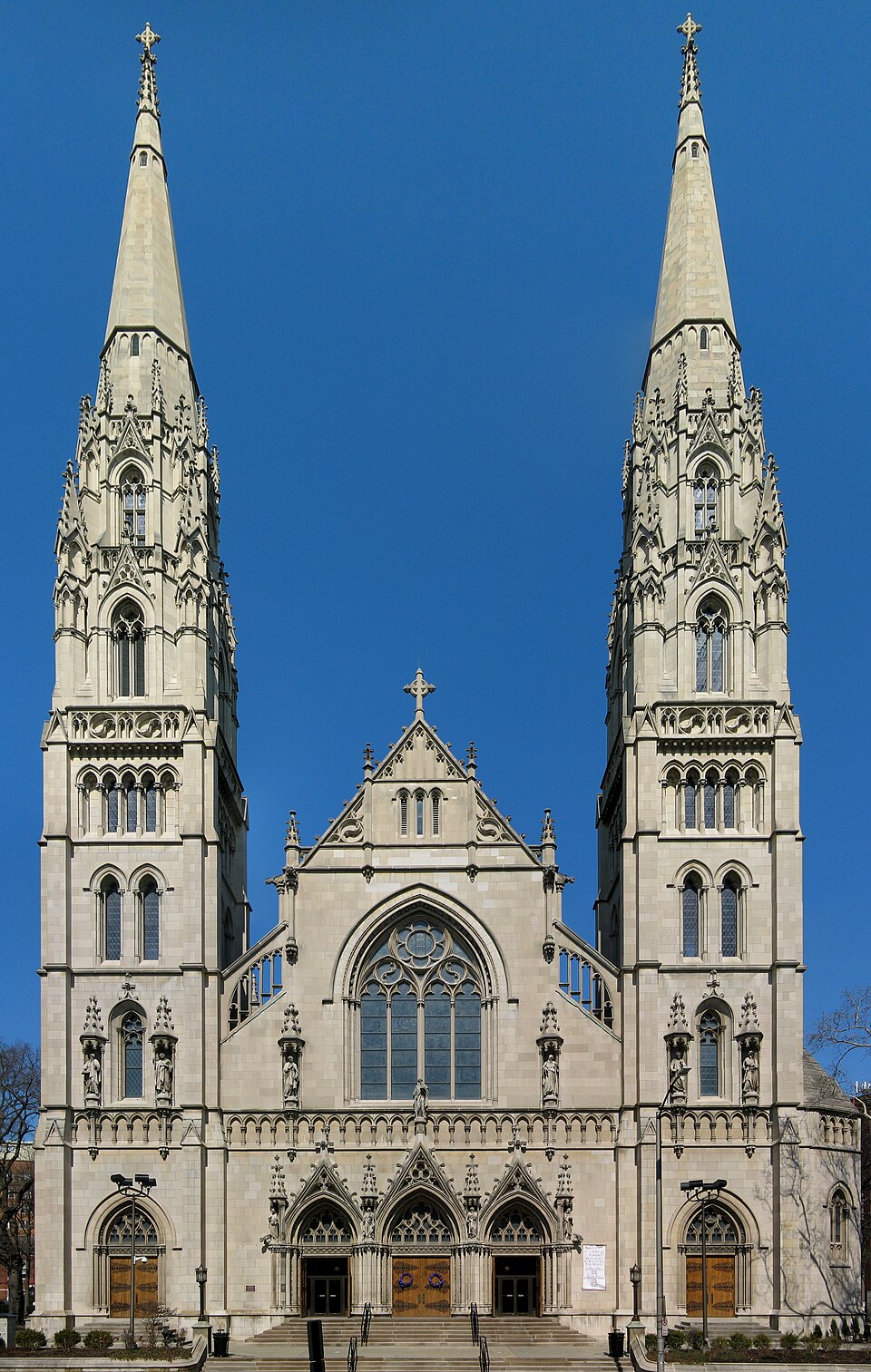
Today, the Diocese of Pittsburgh encompasses Allegheny, Beaver, Butler, Greene, Lawrence, and Washington counties. It traces its institutional founding to August 11, 1843, and reports a Catholic community of approximately 628,000 people. As of July 1, 2026, the diocese consists of 59 parishes. Bishop Mark A. Eckman was installed as the thirteenth Bishop of Pittsburgh at Saint Paul Cathedral on July 14, 2025.
Within this broader history, the Catholic Chapel at Monroeville Mall can be understood as a localized expression of the diocese’s longstanding effort to bring Catholic ministry into the places where Western Pennsylvanians lived, worked, shopped, and gathered. Its presence within the mall preserved a small but meaningful intersection between religious life and the emerging suburban culture of the late twentieth century.
Catholic Chapel Upper Floor | Unit 53 | Service Open the store page in the archive Read from brochure directory and/or floor plan
Preserved research source records associated with this store.
Source Basis: brochure directory + floor plan
Source Notes: Read from brochure directory and/or floor plan
The Diocese of Pittsburgh (Latin: Diœcesis Pittsburgensis) is a diocese of the Catholic Church in Western Pennsylvania in the United States. It was established on August 11, 1843. The diocese is a suffragan diocese of the Archdiocese of Philadelphia. The cathedral church is Saint Paul Cathedral in Pittsburgh. The bishop of Pittsburgh is Mark Eckman. Territory The Diocese of Pittsburgh includes 61 parish-groupings...