J. C. Penney traces its beginnings to 1902, when merchant James Cash Penney opened a small dry-goods store in Kemmerer, Wyoming, as part of the Golden Rule chain. Built around the principles of fair pricing, dependable merchandise, and personal service, the business expanded rapidly throughout the American West. In 1913, the growing company was incorporated as the J. C. Penney Company, and within little more than a decade it had developed into a major national retailer.
During the first half of the twentieth century, Penney stores became a familiar presence in downtown commercial districts across the United States. By 1941, the company operated approximately 1,600 stores in all 48 states. Its merchandise increasingly extended beyond traditional clothing and dry goods, while private brands, national advertising, catalog sales, and consumer credit helped establish Penney's as one of America's best-known general merchandise retailers.
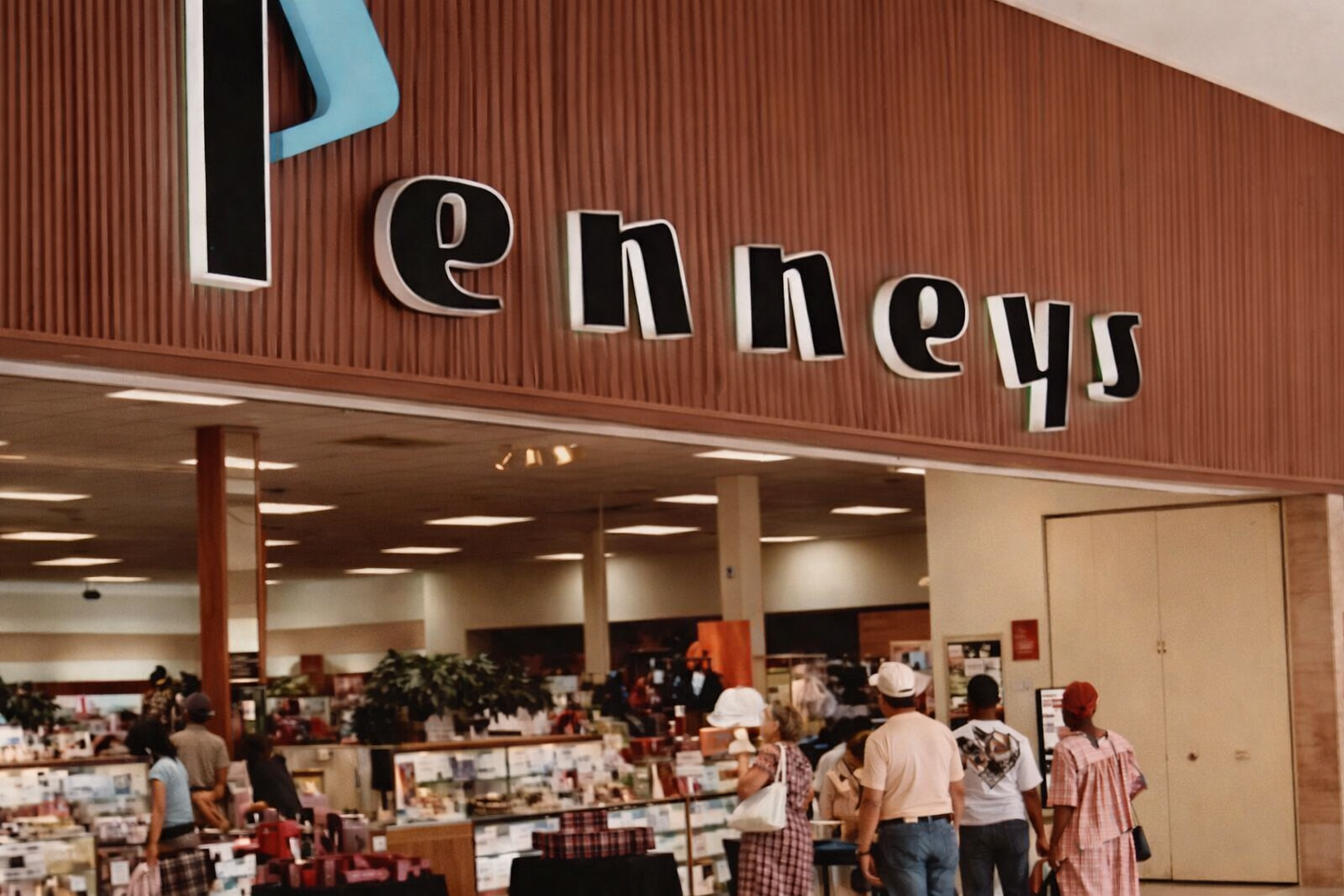
The growth of suburban America after World War II brought an important transformation. As shoppers and retailers moved away from traditional downtown business districts, J. C. Penney followed them into the emerging regional shopping centers. The company opened its first full-line shopping-center department store in 1961 and expanded the concept during the decade. These larger locations offered a broad range of merchandise and services—including clothing, home furnishings, appliances, sporting goods, beauty salons, restaurants, portrait studios, and automotive departments—making Penney's well suited to serve as an anchor for the new generation of enclosed suburban malls.
This period of expansion coincided directly with the development of Monroeville Mall. By the early 1970s, JCPenney had grown to more than 2,000 locations nationwide, reaching the largest store count in its history in 1973. For generations of shoppers, Penney's represented the traditional full-line American department store: a place where families could purchase clothing, household goods, gifts, and everyday necessities during a single visit.
Beginning in the late twentieth century, changes in American retail gradually reshaped the company. JCPenney reduced or eliminated departments such as automotive services, appliances, hardware, and outdoor equipment while placing greater emphasis on apparel, home merchandise, private-label brands, cosmetics, and other core department-store categories. Catalog operations, once an important part of the business, were discontinued in 2011 as retail increasingly moved online.
Like many traditional department-store chains, JCPenney faced growing challenges from changing consumer habits, declining mall traffic, online competition, and an increasingly competitive retail marketplace. Those pressures intensified during the COVID-19 pandemic, and the company filed for Chapter 11 bankruptcy protection in May 2020. It subsequently emerged from bankruptcy under new ownership and continued operating a reduced national network of department stores.
More than a century after James Cash Penney opened his first store in Wyoming, the JCPenney name remains part of the American retail landscape. Its history reflects the broader evolution of twentieth-century shopping—from downtown commercial streets, to suburban shopping centers and regional malls, and ultimately to the changing retail environment of the twenty-first century.