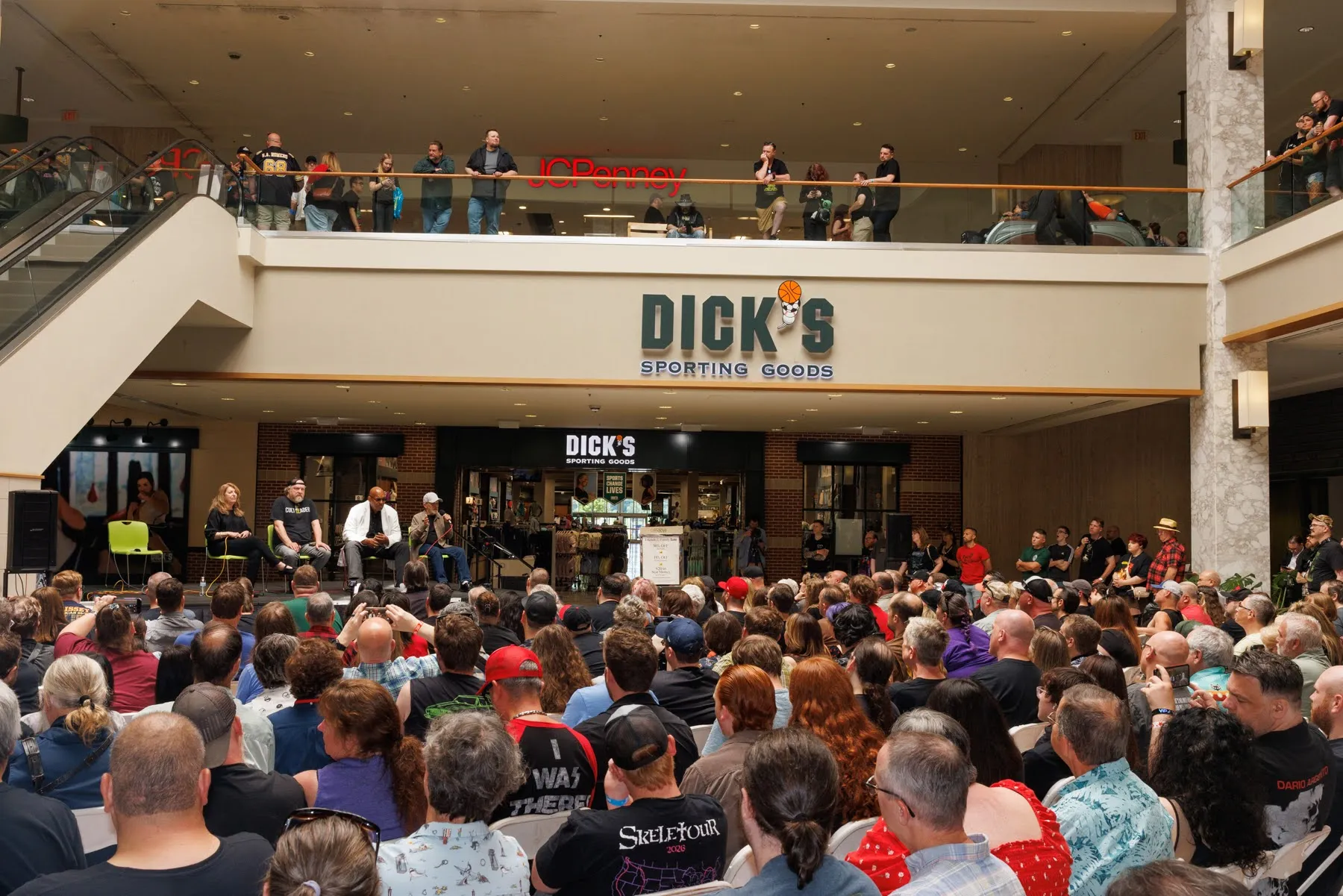
By the early 2010s, however, the mall’s anchor landscape had already changed repeatedly. Gimbels had become Kaufmann’s, Kaufmann’s had become Boscov’s, and Boscov’s had closed in 2008 during that company’s bankruptcy restructuring. That left a large former Boscov’s building available at the west end of the mall. As early as 2010, local reporting indicated that Monroeville Mall officials were discussing possible replacements for the vacant Boscov’s space, with Walmart or a Cinemark movie theater mentioned as possibilities.
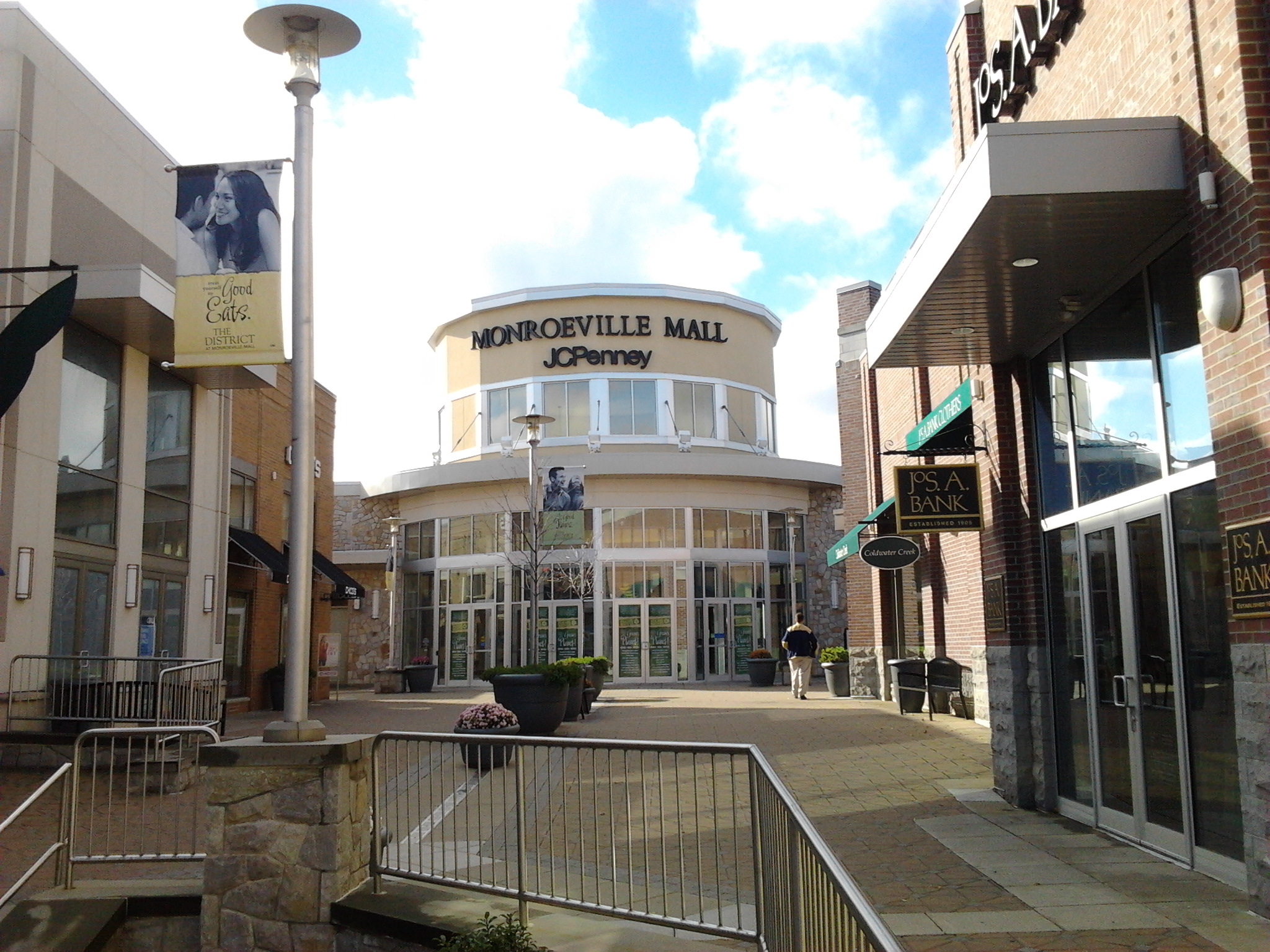
In 2011, the plan became clearer: JCPenney would relocate out of its original center-mall building and into the former Boscov’s space, while the old Penney’s site would be redeveloped for a 12-screen Cinemark theater. CBS Pittsburgh reported in July 2011 that the current Penney’s would become a Cinemark 12-screen movie theater, describing it as Monroeville’s first movie theater since the late 1990s. The same report included a JCPenney representative explaining that the relocated store would not occupy all three levels of the former Boscov’s building, but would use the whole second level and part of the third level.
That detail is crucial to the history. JCPenney was not simply shifting across the mall into an equal replacement box. It was moving from its original, film-famous, center-anchor location into a different inherited department-store shell: the former Gimbels/Kaufmann’s/Boscov’s building. In practical retail terms, this was a modernization and downsizing strategy. In historical terms, it severed JCPenney from the exact physical location that had connected it to the mall’s 1969 opening and to Dawn of the Dead.
The relocation culminated in fall 2012. WTAE reported that JCPenney held a grand-opening celebration on October 5, 2012, with a ribbon-cutting ceremony welcoming shoppers to the store’s new location in the former Boscov’s space at the west end of the mall. The report also noted new store features including a Sephora cosmetics department and a professional hair salon, while confirming that plans called for a new movie theater to be built in the old JCPenney location at the center of the mall.
For the mall’s commercial life, this was a forward-looking redevelopment. For the archive, it is one of the most bittersweet moments in the property’s history. The original Penney’s had survived from the mall’s opening through the late-2000s retail downturn, but by late 2012 it was being emptied, gutted, and prepared for demolition or major reconstruction. A detailed Dawn of the Dead location account from 2013 describes visiting the old Penney’s during its final state: fixtures removed, closeout signage visible, and the store largely emptied before a November 2012 visit in which the building was closed and being gutted. The writer specifically identifies the old JCPenney as a special place for horror fans because it contained two major Dawn of the Dead reference points: the escalator Roger slides down and the elevator associated with Flyboy’s fate.
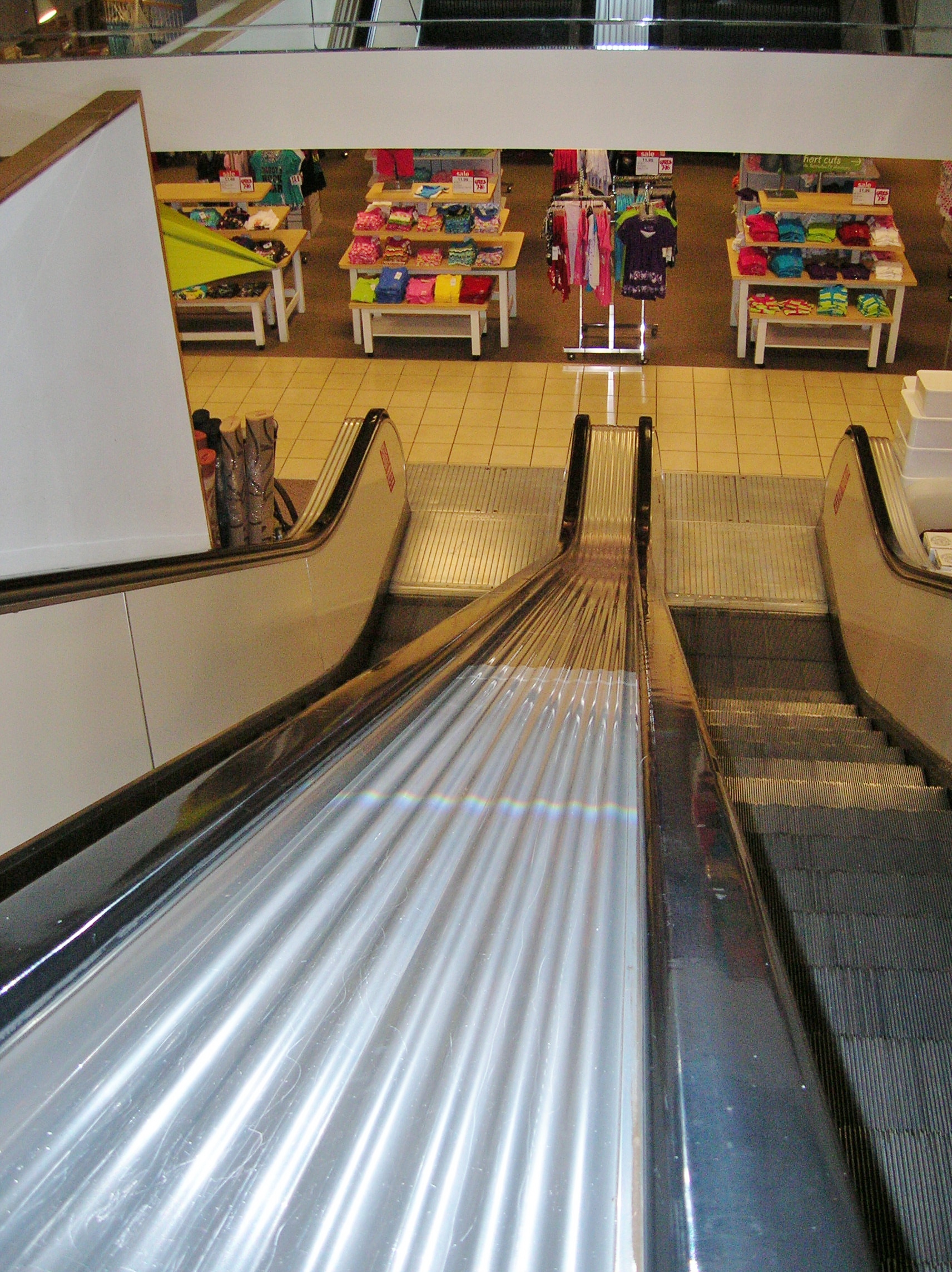
The escalator deserves special attention. In the movie, Roger’s slide down the center of the Penney’s escalator became one of the film’s most kinetic and memorable moments. A 2009 Wikimedia Commons photograph documents the JCPenney escalator before the 2012 relocation, identifying it as the escalator in the Monroeville Mall JCPenney where Scott Reiniger’s character Roger slides down in Dawn of the Dead. The image is especially useful for archive purposes because it is available in high resolution and carries a Creative Commons Attribution-ShareAlike license.
Fan and location-tour photography from the late 2000s and early 2010s also helps document the store shortly before it disappeared. A 2008 location photo essay notes that JCPenney was still the main store from the film, with the store’s escalators, interior aisles, and main interior doors still recognizable. The same account includes specific photo references to “the escalator slide in Penney’s” and the elevator on the first and second levels. A 2011 visit writeup similarly captions the JCPenney escalator as “the one Roger slides down during the shopping spree,” and notes video footage from inside the mall including a ride on that escalator.
The elevator requires a more careful archive note. The visible Penney’s elevator area became a major fan-recognized location because of the Flyboy sequence, and late-period visitors documented the elevator area before the store was gutted. The 2013 Monroeville Project writeup says the elevator had been modernized over time, but that after closure and demolition work began, fans with access reportedly photographed original wood paneling hidden beneath later modernization. The same account says the second-floor elevator area still looked substantially like its film appearance, with modern flooring, carpet, and lighting changes. At the same time, archive wording should avoid overstating the elevator-shaft geography: production references note that some Dawn of the Dead interior spaces, including the hideout and elevator-shaft material, were built or staged at Romero’s Latent Image production facility rather than existing fully as functional mall spaces.
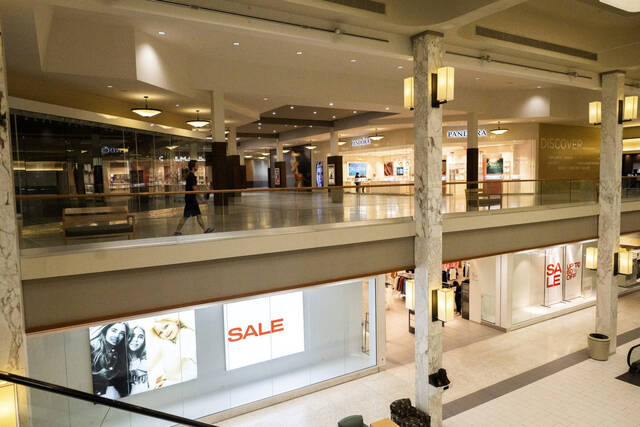
By the end of 2012, the original Penney’s had effectively become a construction site. The mall was transitioning from its classic department-store geometry into an entertainment-anchored redevelopment. The commercial payoff came in 2013, when the Cinemark project opened in the former JCPenney area. Pittsburgh Post-Gazette reporting described the 12-screen theater as being on the upper level in space formerly occupied by JCPenney, after Penney’s moved to the old Boscov’s space. WTAE likewise reported that Cinemark Monroeville Mall would have its grand opening in November 2013 and that the theater was built in the central space where JCPenney had formerly been located.
For Monroeville Mall history, 2011–2012 should be understood as the hinge between two eras. Before this redevelopment, the mall still retained the physical presence of the original Penney’s anchor and with it one of the last major surviving interior film locations from Dawn of the Dead. After the move, JCPenney remained at Monroeville Mall, but not in the same historical place. The brand survived; the landmark location did not. The 2012 relocation preserved JCPenney as an operating anchor while sacrificing the old center-store architecture that had linked the mall’s retail history, its 1969 design, and its Romero-era film legacy.